


Supplements for maintaining independence in old age and supporting focus

Focus and memory depend on more than supplements. Supplements for maintaining independence in old age may help fill nutritional gaps, but a varied diet is the foundation. Nutritional needs depend on a person’s health and diet.
It makes sense to look for ways to support clear thinking, steady movement, and everyday independence as you age. Nutrients such as vitamin B12, magnesium, calcium, and vitamin D each have roles in normal bodily functions, but taking more isn’t automatically better.
This guide explains how to think about supplements safely and which nutrients older adults may need. It also covers vitamin D’s role in calcium absorption and bone and muscle health, along with what the article says about nutrients associated with focus and memory.
Table of Contents
1. Which Supplements Should I Take for Healthy Aging?
For strength, mobility, and independence, begin with varied eating that includes vegetables, protein-rich foods, and calcium sources. Supplements may help address a gap, but the right choice depends on diet, health, and medicines. Calcium supports bones, while vitamin D helps the body absorb it. Vitamin B12 supports healthy nerves and red blood cell production.
Calcium also supports normal muscle contraction, nerve signaling, and blood-vessel function. Men over age 50 need about 1,000 milligrams daily, while women over 50 need about 1,200 milligrams. Ask a health professional what amount of calcium is appropriate for you. Food sources such as dairy products, fortified foods, and leafy vegetables can contribute; supplements may be useful when food intake falls short.
Magnesium supports bone and muscle function and normal cardiovascular processes. A daily multivitamin study found participants reported better functional health than placebo participants after 3 years. Researchers assessed function using the Kansas City Cardiomyopathy Questionnaire, which measures health status in people with heart failure. That result is not proof that a multivitamin improves mobility for everyone.
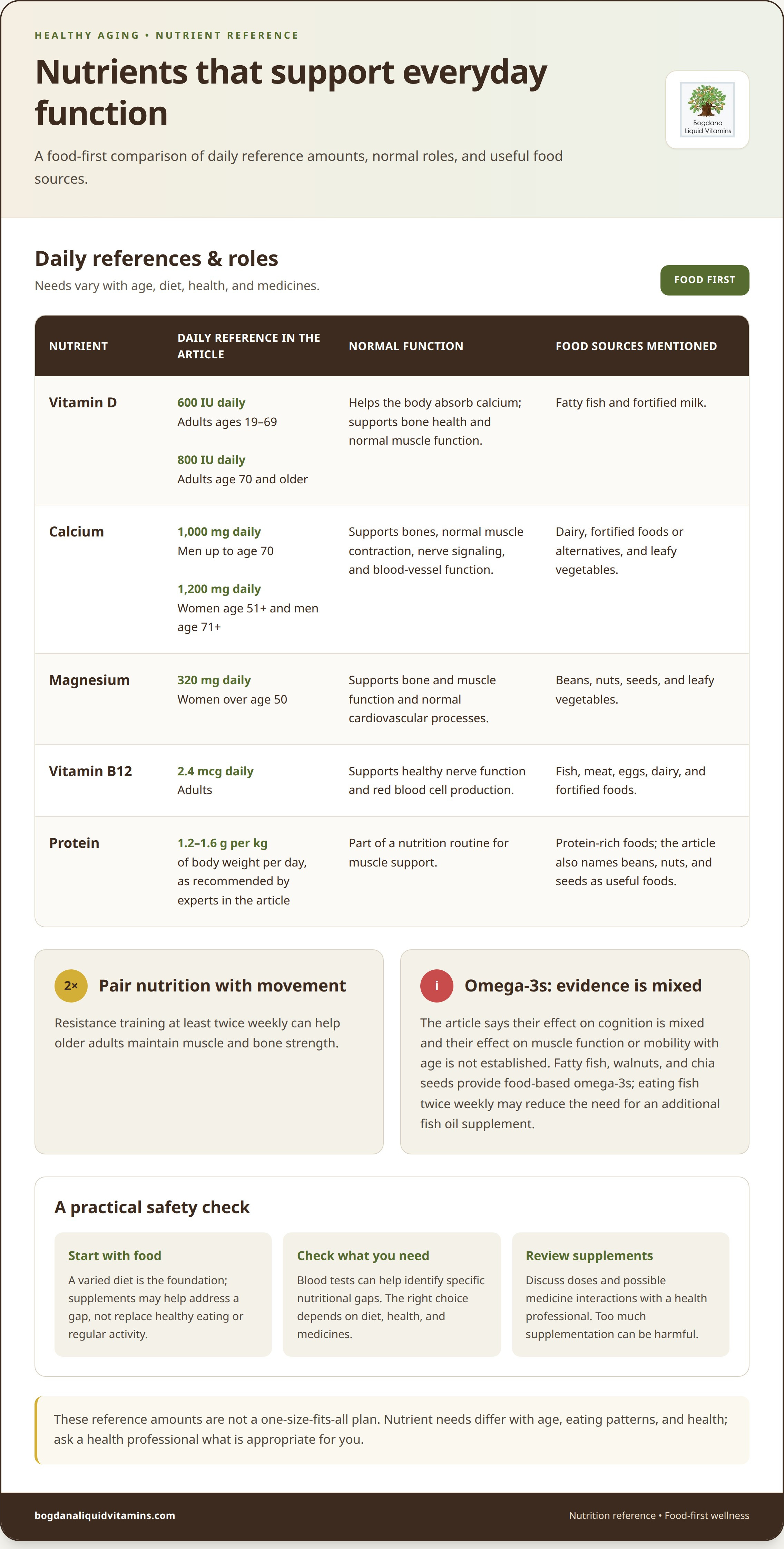
Omega-3 supplements have mixed evidence for preserving cognition, and their effect on muscle function or mobility with age is not established here. Fatty fish, walnuts, and chia seeds provide food-based omega-3s. Eating fish twice weekly may reduce the need for an additional fish oil supplement.
Pair good nutrition with movement. Resistance training at least twice weekly can help older adults maintain muscle and bone strength. Before starting a supplement, discuss your medicines and possible interactions with a health professional. Blood tests can help identify specific nutritional gaps.
2. Vitamin D, calcium absorption and muscle strength
Vitamin D helps the body absorb calcium, which supports bone density and normal muscle function. Together, these nutrients matter for movement: low vitamin D in older people has been associated with a higher risk of falls. Adequate intake supports bone health, while calcium also plays a role in muscle contraction and nerve signaling. These functions contribute to everyday strength, from standing up to walking.
The National Institutes of Health Office of Dietary Supplements recommends 600 international units (IU) daily for adults ages 19 to 69. Vitamin D deficiency can affect bone and muscle function, and older adults may have different needs from younger adults. Too much supplementation can also be harmful. A suitable amount depends on dietary intake, health, and other supplements or medicines. A health care provider can advise whether testing or supplementation makes sense.
Vitamin B12 supports nerve function and the production of red blood cells and DNA. The National Institutes of Health Office of Dietary Supplements recommends 2.4 micrograms daily. Older adults may have difficulty absorbing naturally occurring B12 from food, while strict vegetarians and vegans have fewer natural food sources. Fish, meat, eggs, and dairy provide B12; fortified foods can also contribute.
Build a food-first routine with vitamin D sources such as fatty fish and fortified milk, plus calcium-rich dairy or fortified alternatives. Magnesium from beans, nuts, seeds, and leafy vegetables supports bone, muscle, and cardiovascular health. Chronic health conditions can affect nutrient needs, so review your diet and medicines with a medical professional. To explore liquid vitamin options, consider how they fit alongside food and movement.
3. Nutrients older adults may need
Nutrient needs vary with age, eating patterns, and health. The National Institutes of Health Office of Dietary Supplements recommends 800 IU daily for adults age 70 and older. It recommends 1,000 milligrams of calcium daily for men up to age 70, and 1,200 milligrams daily for women age 51 and older and men age 71 and older. Women over age 50 need 320 milligrams of magnesium daily, according to the National Institutes of Health Office of Dietary Supplements. Choosing supplements for maintaining independence in old age starts with identifying real dietary gaps.
Food comes first: beans, nuts, seeds, leafy vegetables, dairy, and fortified foods provide useful vitamins and minerals. For muscle support, experts recommend 1.2–1.6 grams of protein per kilogram of body weight per day. Creatine has been shown to support strength and muscle protein synthesis, but discuss its use with a health professional.
For adults, the recommended vitamin B12 intake is 2.4 micrograms daily. Older adults who have trouble absorbing B12 from food, or people with low calcium levels, may need a supplement suited to the identified gap. Blood testing can help assess deficiencies; a health care provider or pharmacist can help determine an appropriate dose. Thoughtful supplements for maintaining independence in old age should reflect individual needs rather than a one-size-fits-all routine.
Supplements can cause side effects, interact with prescription medicines, or pose risks at high doses. In the United States, the FDA doesn’t require supplements to be approved for safety or effectiveness before sale. Look for third-party-tested products or recommendations from trusted health professionals, and include supplements on your medication list.
Build a steady routine around varied meals, sleep habits, and social connection, such as sharing dinner with family. These habits complement nutrition; supplements do not replace a balanced diet or regular physical activity.
Bogdana Liquid Vitamins
Bogdana Liquid Vitamins offers liquid formulas for adults and seniors seeking a convenient way to support overall nutrition. Bogdana RNF, the Rejuvenating Nutritional Formula, contains over 100 nutrients, and it's also suitable for young adults
These formulas can complement balanced eating by helping make a broad mix of nutrients part of a wellness routine. They aren’t a substitute for food, movement, or guidance about a diagnosed deficiency. If you’re considering a liquid formula alongside your diet, explore the available liquid vitamin options and consider how they fit your needs and existing supplements.
For questions about Bogdana Liquid Vitamins and your nutrition goals, contact Bogdana Liquid Vitamins.
Make Your Next Wellness Choice Count
Build a routine you can sustain: let everyday meals, movement, and thoughtful supplement choices work together. The best supplements for maintaining independence in old age are those that fit your nutritional needs and support normal bodily functions, not a one-size-fits-all promise. If a liquid formula feels like a practical addition, Bogdana Liquid Vitamins offers One Product for Overall Health for adults and seniors. Choose with your broader wellness routine in mind, and discuss specific deficiencies or medication interactions with a health professional.
Small, considered steps can help you keep investing in the strength and everyday vitality you value.
Frequently Asked Questions
What Helps with Focus and Memory?
Healthy routines and addressing nutrient gaps can support normal brain and nerve function. Low vitamin B12 is associated with cognitive decline and lower neurologic function, so a clinician may consider diet, medicines, and testing when memory changes arise. Omega-3 supplements have mixed evidence for cognition. Fatty fish, walnuts, and chia seeds offer food sources of these fats.
What about multivitamins?
A multivitamin can complement a balanced diet when a person has a nutritional gap, but it isn’t a substitute for varied meals or regular physical activity. In a study, participants taking a daily multivitamin reported better functional health than placebo participants after 3 years. Researchers measured function with the Kansas City Cardiomyopathy Questionnaire, so the finding doesn’t establish a memory benefit.
What supplement brands are recommended?
There isn’t one brand that suits everyone. Look for clear nutrient information and products that are third-party tested or recommended by a trusted health professional. Bogdana RNF is a liquid formula containing over 100 nutrients. Consult a healthcare professional before use, especially if you have a health condition. These statements have not been evaluated by the Food and Drug Administration. The featured product is not intended to diagnose, treat, cure, or prevent any disease.
Which Supplements Should I Take for Healthy Aging?
Choose supplements to address a specific dietary shortfall, rather than automatically adding several products. Nutrients to discuss include vitamin D, calcium, magnesium, and vitamin B12, which support normal bone, muscle, and nerve functions. A healthcare provider can consider your food intake, health conditions, medicines, and test results when weighing whether a supplement is appropriate.
Can vitamin D supplements improve strength, balance, or fall prevention in older adults?
Vitamin D supports bone and muscle function, and deficiency in older people has been linked to increased fall risk. Supplementation may support muscle and bone strength, but it shouldn’t be treated as a stand-alone fall-prevention plan. A study found that older adults taking 1,000–2,000 IU of vitamin D daily experienced more falls and hospitalizations, highlighting the importance of choosing an appropriate dose.


