


Nutritional Gaps in Senior Diets: Causes and Key Nutrients

A smaller appetite doesn’t always mean smaller nutritional needs. Nutritional gaps in senior diets can become more common as appetite, digestion, and nutrient absorption change with age, while some medications can affect absorption or increase nutrient loss. Adults ages 71 and older need 20 mcg of vitamin D per day, according to the National Institutes of Health Office of Dietary Supplements.
It's understandable to assume that eating less would reflect a lower need for nutrition, but getting enough key nutrients still matters for everyday health and bone strength. This article explains why deficiencies become more common with age, how medications may affect nutrient absorption, and which nutrients deserve attention, including vitamin D, calcium, vitamin B12, and protein. You’ll also learn how these nutrients support normal bodily functions and why recognizing possible gaps can help you make more informed choices about nutrition.
Table of Contents
Are There More Nutritional Deficiencies in Older Adults?
Age-related changes in appetite, digestion, and access to food can make it harder to get adequate nutrition. These nutritional gaps in senior diets may affect energy, strength, and hydration.
Causes of Dietary Deficiencies
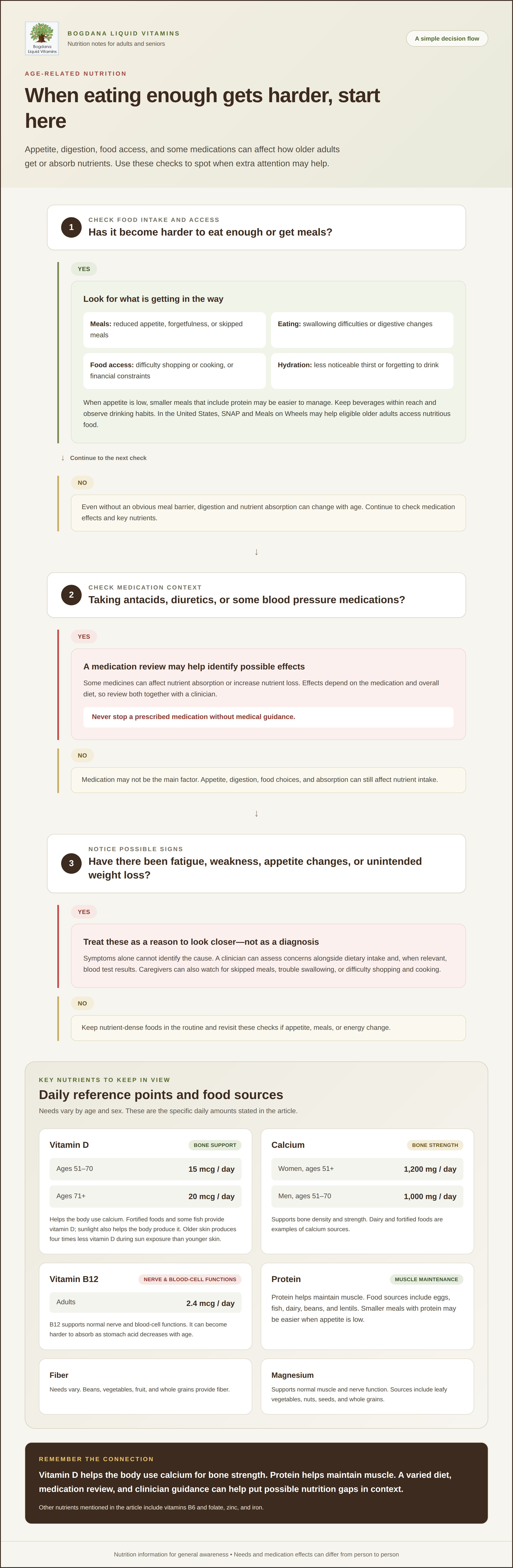
Nutrient deficiencies can occur when food intake or absorption does not meet the body’s needs. Reduced appetite, forgetfulness, swallowing difficulties, and financial constraints can all affect meals. Caregivers can watch for potential malnutrition, including unintentional weight changes, skipped meals, trouble swallowing, or difficulty shopping and cooking. In the United States, SNAP and Meals on Wheels may help eligible older adults access nutritious food.
Common Nutrient Gaps and Daily Needs
Common concerns include vitamins B12 and D, calcium, fiber, and protein. Adults need 2.4 micrograms of vitamin B12 per day, according to the National Institutes of Health Office of Dietary Supplements. Adults ages 71 and older need 20 mcg of vitamin D per day, according to the National Institutes of Health Office of Dietary Supplements. Women ages 51 and older need 1,200 mg of calcium per day, according to the National Institutes of Health Office of Dietary Supplements. Fiber needs vary; beans, vegetables, fruit, and whole grains provide it. Possible deficiency signs include fatigue, weakness, appetite changes, or unintended weight loss.
Iron Deficiency and Anemia
Iron deficiency can contribute to anemia, a condition involving low hemoglobin. Fatigue, weakness, or reduced stamina may be signs of a concern, but symptoms alone cannot identify the cause. Iron-deficiency anemia and low-to-normal hemoglobin levels can affect older adults’ health and quality of life. A clinician can assess symptoms alongside blood test results and dietary intake.
Hydration and Protein Needs
Older adults may drink less if thirst becomes less noticeable or they forget to drink. Caregivers can keep beverages within reach and observe drinking habits. Protein supports muscle maintenance; eggs, fish, dairy, beans, and lentils are practical food sources. When appetite is low, smaller meals that include protein may be easier to manage. Recognizing nutritional gaps in senior diets can help guide supportive food choices.
Medication effects on nutrient absorption
Age can affect digestion, appetite, and the way medications influence nutrient levels. These changes may affect adequate intake and absorption of vitamins, calcium, and other minerals.
Appetite Changes and Nutrient Absorption
Changes in appetite may reduce food intake, while digestive changes can make nutrient absorption less efficient. Reduced stomach acid, saliva, and digestive enzymes may make food breakdown and nutrient absorption more challenging. Smaller meals may also leave less room for vegetables and other nutrient-dense foods.
Antacids, diuretics, and some blood pressure medications can affect nutrient absorption or increase nutrient loss. The effects depend on the medication and overall diet, so a medication review can help identify possible interactions. Never stop a prescribed medication without medical guidance.
Vitamin B12 and Magnesium Absorption
Vitamin B12 and calcium can become harder to absorb as stomach acid decreases with age. This matters because B12 supports normal nerve and blood-cell functions, while calcium supports bone health. Dairy and fortified foods with calcium are examples of dietary choices.
Magnesium supports normal muscle and nerve function. Leafy vegetables, nuts, seeds, and whole grains provide magnesium, but appetite changes can make regular intake harder. Some medications may also affect nutrient levels, depending on the drug. Reviewing diet and medications together can help identify whether intake or absorption needs attention.
For an overview of liquid vitamin options, explore choices for adult and senior nutrition.
Vitamin D and bone health
Vitamin D helps the body use calcium to support bone strength as people age. Older adults need to consider protein and other nutrients that support muscle and normal body function.
Adults ages 51 to 70 need 15 mcg of vitamin D daily; adults ages 71 and older need 20 mcg daily. Women ages 51 and older need 1,200 mg of calcium per day, according to the National Institutes of Health Office of Dietary Supplements. Men ages 51 to 70 need 1,000 mg of calcium daily. Sources include fortified foods and some fish; sunlight also helps the body produce vitamin D. Older skin produces four times less vitamin D during sun exposure than younger skin, making food sources especially relevant.
Calcium supports bone density and strength. Low calcium intake can reduce bone density and mobility and may increase risk of falling. Vitamin D works with calcium to support bones, while zinc supports immune function. Getting enough of these nutrients matters when daily calorie intake decreases with age.
Micronutrients also support cognitive function. Low levels of vitamins B12, B6, and folate can negatively affect cognition and mood. These nutrients have distinct roles, so varied dietary sources matter for older adults.
Protein helps maintain muscle. Low protein intake can contribute to sarcopenia, the decline of muscle mass and strength, and may adversely affect bone health. Eggs, fish, beans, and dairy provide protein. A clinician can help assess whether a supplement fits someone’s needs and medications.
Bogdana Liquid Vitamins: Bogdana RNF - Rejuvenating Nutritional Formula
Bogdana RNF - Rejuvenating Nutritional Formula offers a liquid option for adults seeking broad nutritional support as part of an overall wellness routine. It contains over 100 nutrients, including vitamins, minerals, and other nutrients that support normal bodily functions.
For seniors seeking to complement their dietary intake with a single formula, Bogdana RNF is a liquid dietary supplement with a broad blend of nutrients. A supplement may be a part of general nutrition, but individual nutritional needs can vary. Consult a healthcare professional before use, especially when symptoms or medication effects are a concern.
For questions about Bogdana RNF or its ingredients, contact Bogdana Liquid Vitamins.
Make Your Next Nutrition Choice Count
Addressing nutritional gaps in senior diets starts with noticing everyday patterns and choosing a manageable next step. Keeping a brief record of meals, drinks, and supplement questions can make a conversation with a healthcare professional more focused. Discuss appetite changes, medication concerns, or difficulty eating enough, and review diet or supplement changes with a professional before making them.
Consistency matters more than changing everything at once. Choose nourishing foods that fit your preferences and routine, and make nutrition part of your daily wellness habits. Bogdana Liquid Vitamins offers liquid nutritional support for adults and seniors as part of a broader wellness routine.
Small, steady choices can help you approach your health with greater confidence.
Frequently Asked Questions
What Nutrients Are the Elderly Most Commonly Lacking?
Common shortfalls in older adults include vitamin B12, vitamin D, calcium, protein, and fiber. The nutrients a person may be missing depend on their food choices, appetite, digestion, and medications. For example, adding beans, oats, fruit, or vegetables can increase fiber, while eggs, fish, and dairy offer different nutrients in familiar meals.
How Do You Help Close Nutrition Gaps?
Start by looking for patterns, such as regularly skipped meals, limited food variety, or difficulty chewing and preparing food. Add nutrient-dense options that suit the person’s preferences, such as yogurt with fruit or beans in soup. A healthcare professional can review symptoms, dietary details, medications, and appropriate tests to help identify gaps before considering supplements.
What Are the Best Vitamins for Aging People and Seniors?
There isn’t one best vitamin for every older adult. The right choice depends on diet, absorption, health needs, and medications. Vitamin D, B12, and other nutrients may be relevant, but supplements shouldn’t replace balanced meals. Discuss your supplement with a healthcare professional before starting, especially if you have a health condition or take medication.
What Causes a Loss of Appetite in Older Adults?
Appetite may decrease as hunger and fullness signals change with age. Ghrelin, a hormone associated with hunger, can decrease, while higher cholecystokinin levels can contribute to feeling full sooner. Medications, difficulty swallowing, and changes in routine may also affect food intake. Smaller, more frequent meals can make eating feel more manageable.
What Causes Dietary Deficiencies?
Nutrient deficiencies can develop when someone consumes too little of a nutrient, has limited access to food, or absorbs nutrients less efficiently. A varied diet may be harder to maintain when shopping, cooking, swallowing, or appetite are challenges. Some medications can also affect absorption or increase nutrient loss, so reviewing diet and medication together can help identify possible contributing factors.


