


How to Try an Alternative to Swallowing Large Vitamin Pills

A large vitamin tablet isn’t your only option. If you’re looking for an alternative to swallowing large vitamin pills, the pop-bottle technique may help you swallow a tablet, and liquid vitamins can be another way to take supplemental nutrients such as vitamin D, vitamin B12, and magnesium.
It’s understandable to want an easier routine, but crushing a pill isn’t always safe: some medicines should not be broken apart. This guide explains how to try the pop-bottle technique, what to consider before crushing or splitting pills, and when a liquid supplement may suit your wellness routine. You’ll also learn why medicine-specific questions belong with a pharmacist or prescribing clinician.
Table of Contents
Safety considerations when crushing pills
Liquid or chewable vitamins don’t automatically provide the same dose as standard tablets. Compare each product’s label, serving size, and amounts of nutrients such as vitamin D or vitamin B12.
Ask a pharmacist before altering medicine. Check before splitting, crushing, or grinding prescription or over-the-counter pills. The FDA and Institute for Safe Medication Practices warn that altering some dosage forms can change how medicine is released. Ask about the exact medicine, not just its active ingredient.
Keep special coatings and release designs intact. Don’t crush timed-release or enteric-coated medicines. The Institute for Safe Medication Practices identifies these as formulations that can be unsafe to crush. If a label describes extended release or a protective coating, ask a pharmacist about an appropriate option.
Crush only when approved. Follow the pharmacist’s instructions for the specific pill. If crushing is approved, the powder may be mixed with soft food, such as applesauce. Take the full mixture as directed, rather than preparing it ahead or leaving residue behind.
Use one pill at a time. Handle medicines separately to avoid mixing up doses or leaving powder behind. Avoid taking pills with fruit juice, since it can affect some medicines. Use water unless the medication’s directions or a pharmacist advises otherwise.
Compare vitamin labels before switching forms. Check serving sizes and amounts of individual nutrients, including vitamin D and magnesium. A liquid or chewable may provide a different amount from a tablet. Compare the nutrients and serving directions, rather than relying on the format alone.
If crushing is approved, mix the powder into soft food, such as applesauce. Ask a pharmacist before cutting or grinding a pill, and ask about alternative medication forms or options.
Comparing Liquid, Gummy, and Powder Vitamin Absorption
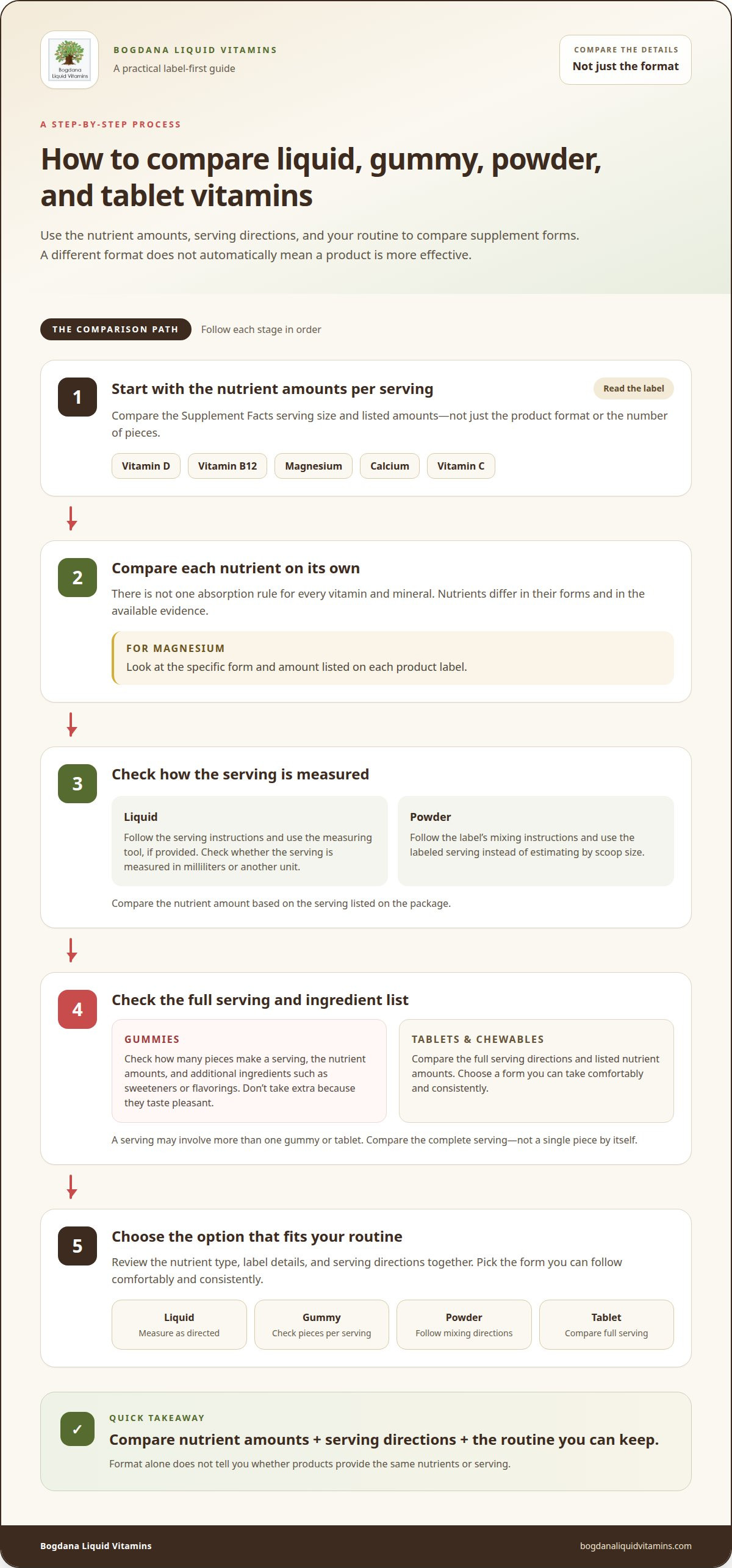
Compare nutrient amounts per serving. Liquids, gummies, powders, and chewables can list different amounts of vitamin D, vitamin B12, or magnesium. The FDA’s Supplement Facts label provides serving size and nutrient amounts. Compare those details, not just the product format or number of pieces.
Assess each nutrient separately. There isn’t one absorption rule for every vitamin and mineral. Nutrients differ in their forms and the available evidence. For example, compare the specific magnesium form and amount listed on each label.
Measure liquids as directed. Use the product’s serving instructions and measuring tool, if provided. Check whether its serving is measured in milliliters or another unit. Then compare the listed vitamin D or vitamin B12 amount with the tablet’s labeled serving.
Follow preparation instructions for powders. Check whether the label says to mix the product with water, food, or another drink. Use the labeled serving instead of estimating by scoop size. Compare nutrient amounts based on the serving listed on the package.
Choose based on evidence and routine. A liquid, gummy, chewable, or powder isn’t automatically more effective because of its form. Review the label, nutrient type, and serving directions together. If a liquid fits your routine, you can browse liquid vitamin options and compare their product information.
What are the pros and cons of gummy vitamins compared with tablets?
Choose the form you can take comfortably. Gummies are generally chewed, while tablets are typically swallowed. If a tablet’s size makes your routine difficult, a gummy may be easier to take. Check the product’s directions rather than assuming every gummy suits everyone.
Match nutrient amounts, not the format. Check the serving size and amounts of vitamin D, vitamin B12, or vitamin C on each label. One gummy and one tablet may list different amounts. Compare the full serving, since a serving can involve more than one piece.
Review the full ingredient list. Gummies and tablets can differ in more than their nutrients. Check the listed ingredients, including sweeteners, flavorings, and other components, then decide which formula suits your preferences. For example, compare two vitamin C labels for nutrient amounts and additional ingredients.
Consider the range of nutrients you need. A gummy may focus on selected nutrients, while another product may list a different combination. Compare nutrients such as magnesium, calcium, and vitamin D individually. A shared vitamin name doesn’t mean products offer the same overall formula.
Follow serving directions consistently. Use the product label to determine how many gummies or tablets make up a serving. Keep the directions handy, and don’t take extra gummies because they taste pleasant. For adults and seniors, compare comfort, nutrient amounts, and how easy it is to follow the directions.
People who find pills difficult may consider swallowing techniques. The pop-bottle method improved swallowing by 60% compared with taking a sip of water from a cup: place the tablet on your tongue, close your lips around a plastic bottle opening, and swallow the water and tablet using a sucking motion. The lean-forward method for swallowing capsules showed an 89% improvement compared with taking a sip of water from a cup. Starting with smaller, easier-to-swallow pills may help reduce anxiety. People with difficulty swallowing pills or other things should seek an evaluation, starting with a primary care physician.
Bogdana Liquid Vitamins
Bogdana Liquid Vitamins offers a liquid option for adults who prefer not to swallow large vitamin pills. If you’re comparing formats for a daily nutrient routine, consider the serving directions and the nutrients listed, such as vitamin D, vitamin B12, magnesium, and calcium.
Bogdana RNF - Rejuvenating Nutritional Formula contains over 100 nutrients. Other offerings include Bogdana Liquid Vitamins for Adults and Seniors and Bogdana Liquid Vitamins for Women and Men. Compare their labels with your nutritional priorities, and consider how a liquid serving fits your routine. A liquid vitamin is a supplement, not a replacement for medication or advice about changing prescribed medicine.
For questions about Bogdana Liquid Vitamins and its liquid vitamin offerings, contact Bogdana Liquid Vitamins.
Choose a Format That Fits Your Routine
Choose a supplement format you can take consistently while keeping your nutritional needs in view. A liquid option may be an alternative to swallowing large vitamin pills, but it doesn’t replace prescribed medicine or guidance about changing how you take it. For medication questions, speak with a pharmacist or prescribing clinician.
Bogdana Liquid Vitamins offers Bogdana RNF - Rejuvenating Nutritional Formula, Bogdana Liquid Vitamins for Adults and Seniors, and One Product for Overall Health. Compare the product information with your priorities, including nutrients such as vitamin D, vitamin B12, and magnesium.
Thoughtful choices can make a wellness routine easier to follow. Choose a format that feels manageable for you.
Frequently Asked Questions
What are alternatives to swallowing large vitamin pills, such as gummies, liquids, powders, chewables, and dissolvable tablets?
Gummies, liquids, powders, chewables, and dissolvable tablets offer different ways to take nutrients without swallowing a large tablet whole. Compare the serving directions and amounts of nutrients such as vitamin D, vitamin B12, and magnesium. For example, a powder may need mixing, while a dissolvable tablet is prepared according to its label. Choose a format that fits your routine and nutrient needs.
How can you split, crush, or dissolve a vitamin tablet safely?
Follow the product label, and ask a pharmacist before changing a tablet’s form, especially if it’s medication. Split or crush a vitamin only when its instructions allow it; don’t assume a scored tablet can always be divided evenly. Dissolve a tablet only if the label directs you to do so. For medicines approved for crushing, a pharmacist can explain how to take the powder with soft food, such as applesauce.
What risks do gummy and liquid vitamins pose, including sugar, allergens, and overdose?
Gummies and liquids can differ in ingredients and nutrient amounts, so review the full ingredient list and serving directions. Follow the labeled serving and don’t take extra gummies because they taste pleasant; check the label for added sugars and allergens that matter to you.


