How to Improve Nutrient Absorption From Food Through Better Meals

A meal’s nutrient value depends on more than what’s on your plate. To understand how to improve nutrient absorption from food, pair ingredients thoughtfully: fat helps the body absorb fat-soluble vitamins, while vitamin C can support the absorption of iron from plant foods. These simple combinations can help you get more from everyday meals.
Choosing nutritious ingredients matters, but digestion and food interactions also affect how your body uses nutrients. Some compounds can limit mineral absorption, while cooking, hydration, and thorough chewing can influence the process.
Learn what can interfere with absorption, how digestion prepares food for use, and which practical pairings may help, from adding citrus to iron-rich beans to enjoying tomatoes with olive oil. The goal isn’t perfect meals, but a more informed, flexible approach to nourishing your body.
Table of Contents
1. What Can Interfere With Nutrient Absorption?
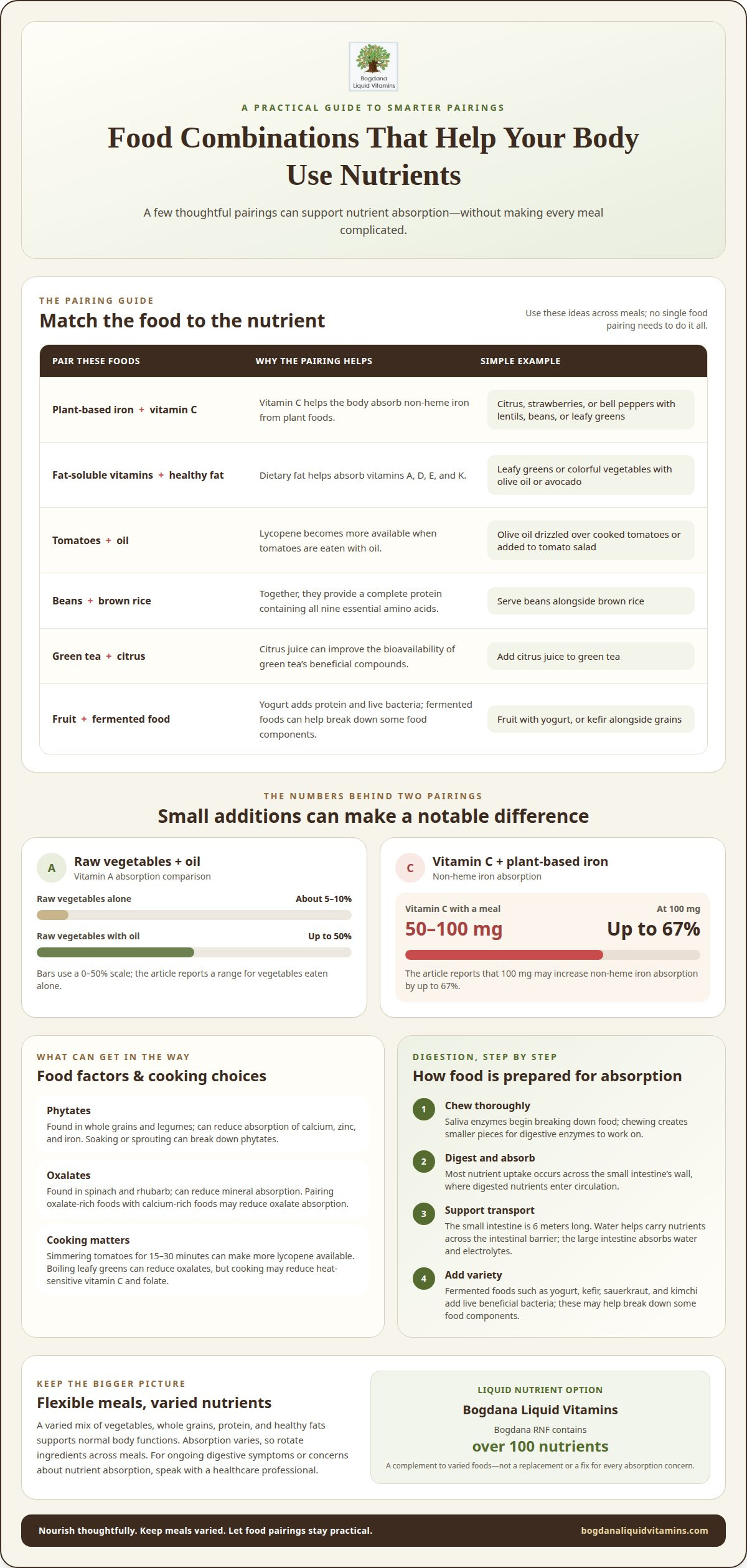
Vitamin D helps the gut and kidneys absorb calcium, so both nutrients matter for bone support. Vitamins A, D, E, and K are fat-soluble, meaning dietary fat helps the body absorb them. Pairing leafy fruits and vegetables with healthy fats, such as olive oil or avocado, can support this process. For vitamin A, the difference can be notable: raw vegetables with oil may provide up to 50% absorption, compared with about 5-10% from raw vegetables alone.
Some plant compounds can bind minerals. Phytates in whole grains and legumes, and oxalates in spinach and rhubarb, can reduce the absorption of minerals such as calcium, zinc, and iron. Soaking or sprouting grains and legumes can break down phytates; pairing oxalate-rich foods with calcium-rich foods may reduce oxalate absorption. IBS, coeliac disease, and chronic stress may also interfere with absorption.
How do cooking methods affect nutrient bioavailability? Simmering tomatoes for 15-30 minutes makes more lycopene available by breaking down plant cell structures. Boiling leafy greens can reduce oxalates, but cooking may also reduce heat-sensitive vitamin C and folate.
What symptoms suggest nutrient malabsorption, and when should you see a doctor? Persistent symptoms may indicate an absorption issue. Discuss them with a healthcare provider, especially if they continue despite changes to your eating habits.
Can supplements improve nutrient absorption, and what are the risks of taking them? Supplements can provide nutrients, but they don’t necessarily address why absorption is limited. Unnecessary or overlapping supplements may provide nutrients you don’t need, so seek professional guidance before relying on them.
2. How digestion prepares food for nutrient absorption
Digestion begins in the mouth, where saliva enzymes start breaking down food before you swallow. Chewing thoroughly breaks vegetables, grains, and peppers into smaller pieces, helping digestive enzymes work efficiently. Digestive enzymes help break food down into nutrients the body can absorb.
Most nutrient uptake occurs across the small intestine’s wall, where digested nutrients enter circulation. The small intestine is 6 meters long, creating broad contact between food contents and absorption surfaces. Water helps carry nutrients across the intestinal barrier, while the large intestine absorbs water and electrolytes. Hydration supports this transport and regular bowel movements.
Combining fermented foods such as yogurt, kefir, sauerkraut, or kimchi adds live beneficial bacteria to meals. These bacteria can help break down food components people cannot digest, making some otherwise inaccessible nutrients available. Fermented-food bacteria may also produce small amounts of vitamin B12. For example, an addition of yogurt with fruit or kefir alongside grains can add variety to meals.
Stress and digestion are linked, and chronic stress can interfere with absorption. Try sitting down to eat, chewing slowly, and taking a short walk or practicing breathwork after meals. These habits can support digestion. A varied mix of vegetables, whole grains, protein, and healthy fats provides nutrients for normal body functions.
If you’re exploring liquid nutrients alongside food, browse liquid vitamin options as one part of a balanced routine.
3. Food combinations that support nutrient absorption
Pair plant-based iron with vitamin C to help your body absorb more non-heme iron. Add citrus, strawberries, or bell peppers to lentils, beans, or leafy greens. Vitamin C helps make this form of iron easier to absorb. Consuming 50–100 mg of vitamin C with a meal can increase non-heme iron absorption; 100 mg may increase it by up to 67%.
For tomatoes, add olive oil. Lycopene, an antioxidant in tomatoes and other red-hued fruits and vegetables, becomes more available when eaten with oil. Try drizzling cooked tomatoes with olive oil or adding oil to a tomato salad. The practical takeaway: pair colorful plant foods with a source of fat.
Other pairings offer different benefits. Beans and brown rice together provide a complete protein containing all nine essential amino acids. Whole-wheat bread with peanut butter is another complementary pairing. For a satisfying meal, combine carbohydrate-rich foods with protein or healthy fats, such as fruit with yogurt or whole-grain toast with nut butter.
Small additions can complement familiar drinks and snacks. Citrus juice in green tea can improve the bioavailability of its beneficial compounds. Pairing fruit with a fermented food such as yogurt adds protein and live bacteria that support gut health. These combinations add variety without relying on one food or pairing for every nutrient.
You don't need a complicated nutrition plan to eat healthier. Instead, you can dramatically boost how much nutrition you absorb from your food by using two simple ingredient pairings:
Pair plant iron with vitamin C: Plant-based sources of iron (like spinach, lentils, and tofu) are easier for your body to absorb when you eat them alongside foods high in vitamin C (like bell peppers, citrus, or berries).
Add healthy fats to colorful produce: Many critical vitamins in vegetables—like vitamins A, D, E, and K—are fat-soluble. Adding a source of healthy fat (like avocado, olive oil, or nuts) unlocks these nutrients so your body can actually use them.
Bogdana Liquid Vitamins
Bogdana Liquid Vitamins offers a liquid nutrient option to complement the food-pairing habits discussed above. Meals remain the foundation: combining plant-based iron with vitamin C, or fat-soluble vitamins with healthy fats, helps you make thoughtful choices at the table. Liquid nutrients can be an additional part of overall nutrition routine, not a replacement for varied foods or a way to correct every absorption concern.
Bogdana RNF, the Rejuvenating Nutritional Formula, contains over 100 nutrients and was created for overall health. Bogdana Liquid Vitamins for Women and Men offer options for different adult audiences. Explore how liquid vitamins fit into balanced meals and nutrients such as vitamin C, vitamin D, calcium, and iron, and consider the options that suit your needs.
Speak with a healthcare professional about ongoing digestive symptoms or concerns about nutrient absorption. Explore Bogdana RNF, a liquid nutritional option for adults and seniors, on the Bogdana Liquid Vitamins website.
Build a More Nourishing Routine
A useful next step to learning how to improve nutrient absorption from food is to build a routine you can maintain. Notice which meal habits fit your schedule and preferences, then adjust gradually. If you have ongoing concerns about nutrient intake or digestion, discuss your individual needs with a healthcare professional.
Liquid vitamins may be one option to explore as part of your broader wellness approach. Consider how they fit with your food choices and daily routine, and seek professional guidance if you have questions about your nutrient needs or use other supplements.
Keep building a nourishing routine one thoughtful choice at a time. Small, sustainable steps can support wellbeing over the long term.
Frequently Asked Questions
What Can Interfere With Nutrient Absorption?
Absorption differs with individuals, so the same meal won’t deliver the same amounts of every nutrient to everyone. Persistent digestive symptoms can be a reason to discuss nutrient absorption with a healthcare provider. A useful starting point is to consider your overall eating pattern and whether a restricted or repetitive diet limits the range of nutrients available in your meals.
What factors affect nutrient absorption from food?
Food variety and preparation both shape the nutrients available across your meals. To improve nutrient absorption from food, look beyond one ingredient and build a varied pattern with seasonal vegetables, whole grains, quality proteins, and healthy fats. Aim to include a wider range of plant foods across the week rather than relying on the same few ingredients.
Which foods and food combinations improve absorption of iron, calcium, zinc, and fat-soluble vitamins?
Iron from meat, fish, and poultry is heme iron, which the body readily absorbs. For other nutrients, choose varied sources across meals: dairy foods can contribute calcium, while meat, seafood, legumes, and seeds provide zinc. Pairings can support nutrient uptake, but no single meal needs to supply every mineral or vitamin.
Does soaking, sprouting, or fermenting foods improve mineral absorption?
These preparation methods can support mineral availability in grains and legumes, but they suit different foods and recipes. Choose what fits your cooking routine: soaking works well before preparing dried beans. Use sprouted grains in salads or sandwiches. Fermented foods such as sauerkraut add variety and distinctive flavor to meals.
How do dietary fat and fiber affect absorption of vitamins and minerals?
Dietary fat supports the absorption of vitamins A, D, E, and K. Meals containing these nutrients can be considered a source of fat. Fiber contributes to a balanced eating pattern and affects how quickly food moves through digestion. Rather than cutting out fiber-rich foods, include them in meals and vary your sources to support a broad nutrient intake.