


Feeling Better After Starting Vitamins: How Long It May Take

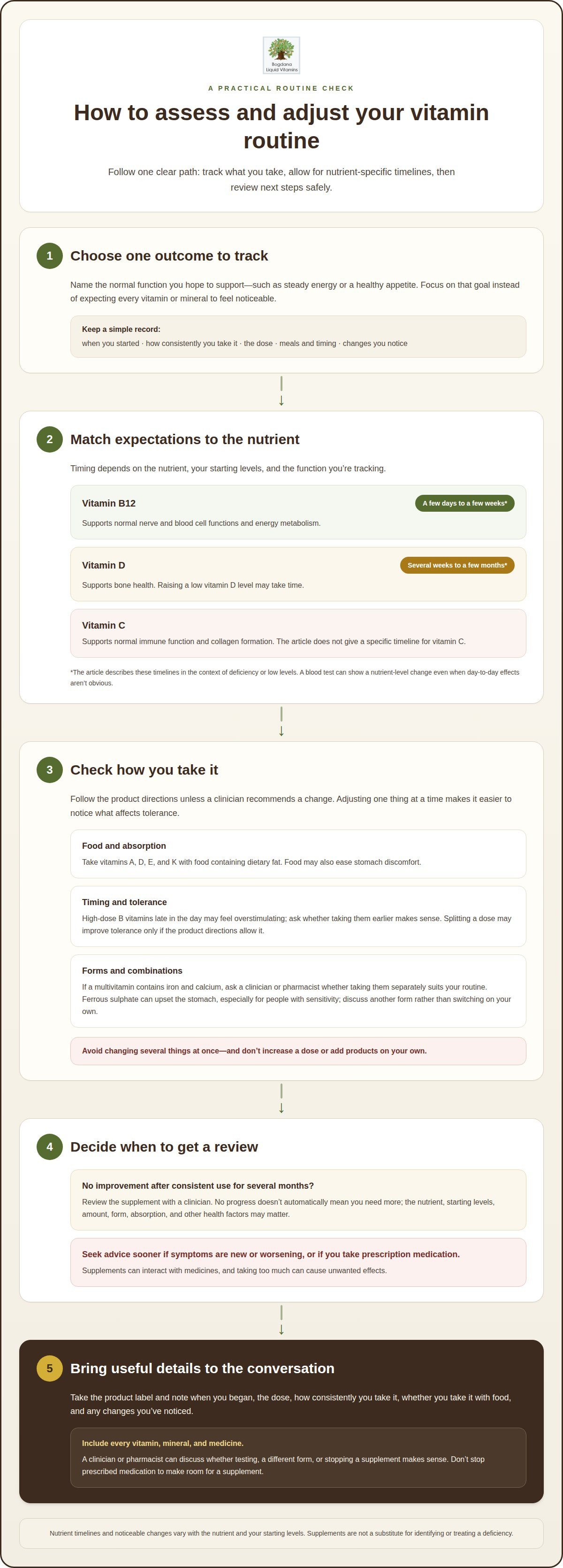
Feeling no different right away doesn’t tell you whether a vitamin is helping. Feeling better after starting vitamins may take a few weeks, especially when a nutrient deficiency is involved; some people need several months of consistent use. Signs of feeling better after starting vitamins depend on the nutrient and your starting levels. If you’re deficient in vitamin B12, changes may show within a few days to a few weeks, while raising low vitamin D can take several weeks or a few months.
It’s natural to look for a clear sign that your routine is helping, but timing depends on the nutrient, your starting levels, and what you’re tracking. This guide explains how to notice possible changes without treating every difference as proof, why improvement may be gradual, and when to speak with a clinician about a lack of progress or unwanted effects. You’ll also learn what to consider about dose, form, and timing, and before making changes.
Table of Contents
How Long Does It Take to Feel the Effects of Vitamins and Supplements in Your Body?
Noticeable effects depend on the nutrient, your starting levels, and the change you’re tracking. Nutrients support normal bodily functions, and the time it takes to notice changes varies.
Typical Timelines and Nutrient Deficiencies
A supplement’s timeline is the period between starting it and noticing a change in a nutrient-related function. Nutrient levels can change over weeks or months, and the timeline varies by nutrient. Vitamin B12 supports normal nerve and blood cell functions, while vitamin D supports bone health. Vitamin C supports normal immune function and collagen formation. These examples show why your starting level and the particular nutrient matter.
Signs Supplements May Be Working
Signs of progress are changes that match the normal function supported by a particular nutrient. For example, vitamin B12 supports normal energy metabolism, while vitamin D supports bone health. A blood-test result can also show a change in nutrient levels, even when day-to-day effects aren’t obvious. Track the function you hope to support, such as energy, rather than expecting every vitamin or mineral to feel noticeable. A liquid, capsule, or tablet may differ in how it’s taken, but form alone doesn’t show that effects will happen faster.
In the US, the cost of vitamin blood tests and supplements varies with the test ordered, insurance coverage, and product selected. Blood tests can measure levels such as vitamin B12 or vitamin D; the right test depends on the nutrient being assessed.
Taking too much of a vitamin can cause unwanted effects, and combining products may increase your total intake. Supplements can also interact with prescription medicines, so include every vitamin and mineral in a medication review.
When to consult a clinician about a lack of improvement
If you’ve taken a supplement consistently for several months without noticing improvement, review it with a clinician. The expected timeline depends on the nutrient and your starting levels, so bring the product label and note when you began. Include the dose and any changes in energy, sleep, or other symptoms. These details can help determine whether the supplement matches your goal.
No progress doesn’t always mean you need more. A clinician can consider whether a deficiency was identified, whether the amount and form fit your needs, and whether absorption or another health factor could affect results. For example, low energy may have causes beyond vitamin B12 or iron levels. Avoid increasing a dose or adding tablets on your own, since more nutrients aren’t automatically better.
Arrange a review sooner if a supplement causes new or worsening symptoms, or if you take prescription medication. Bring a complete list of vitamins, minerals, and medicines, including serving amounts. A clinician can assess possible interactions and advise whether testing, a different form, or stopping a supplement makes sense. Don’t stop prescribed medication to make room for a supplement.
Before the appointment, write down one clear outcome you hoped to support, such as steady energy or a healthy appetite. Record how consistently you’ve taken the supplement and whether you take it with food. This gives the conversation a practical focus. If you’re considering a broader daily nutrient routine, explore liquid vitamin options as one possibility to discuss alongside your health needs.
Adjusting dose, form, and timing
Adjustments may improve tolerance, but changing several things at once makes it harder to tell what’s having an effect. Follow the label’s directions unless a clinician recommends a change. Note symptoms, timing, and meals as you continue your routine. This record can help you identify whether a specific adjustment makes a difference.
Take vitamins A, D, E, and K with food containing dietary fat, with fat which supports their absorption. If a multivitamin contains iron and calcium, ask a clinician or pharmacist whether taking them separately would suit your routine. Food may also ease stomach discomfort. For example, taking a supplement with a meal may feel gentler than taking it on an empty stomach.
Timing matters, too. High-dose B vitamins late in the day may feel overstimulating, so ask about taking them earlier. Splitting a dose between morning and evening may improve tolerance. Ferrous sulphate can upset the stomach, especially for sensitive people. Discuss another mineral form rather than switching or changing the amount yourself.
Choose a supplement that matches a specific nutrient need, such as vitamin D or iron, and read its serving directions carefully. Check the full ingredient list to avoid doubling nutrients across products. For safe use, review your health needs, current medicines, dose, and ingredients with a clinician or pharmacist. If symptoms continue, seek their advice before adjusting the dose or choosing a different form.
Bogdana Liquid Vitamins
Bogdana Liquid Vitamins offers liquid formulas for adults and seniors, and for women and men, as an option for a consistent wellness routine. If you’re considering a broad nutrient formula, Bogdana RNF - Rejuvenating Nutritional Formula, contains over 100 nutrients. Nutrients such as B vitamins, vitamin C, vitamin D, and minerals support normal bodily functions, but supplements aren’t a substitute for identifying or treating a deficiency.
Choose a formula based on your general nutrition goals, and review its ingredients alongside your current supplements and medicines. The RNF ingredient list can help you understand the nutrients in that formula. For symptoms, suspected deficiency, or medication questions, consult a clinician rather than relying on a supplement to diagnose or treat a health concern.
For questions about Bogdana Liquid Vitamins and its formulas, contact Bogdana Liquid Vitamins.
Build a Routine That Fits Your Next Step
Let your next choice reflect your goals, daily habits, and the guidance you’ve received. Feeling better after starting vitamins can take time, so give your routine a clear purpose and keep your expectations grounded. If you’re considering a liquid option for general wellness, Bogdana Liquid Vitamins offers Bogdana RNF, a Rejuvenating Nutritional Formula, for overall health suitable for young adults, men, women, and seniors.
A thoughtful routine starts with knowing what you’re taking and why. Keep your clinician informed about supplements and medicines, especially when your needs or health circumstances change. Consistent, informed choices can support normal bodily functions while keeping your broader wellness goals in view.
Small, considered steps can make wellness feel more manageable. Keep learning, stay attentive to your needs, and choose a path that supports your long-term well-being.
Frequently Asked Questions
How Do You Know if Vitamins Are Working?
Look for a relevant, sustained change, not one unusually energetic morning. A useful sign of feeling better after starting vitamins might be a gradual change in the symptom you’re tracking. If you’re taking B12 for a diagnosed deficiency, note whether fatigue changes over time and share that record with your clinician. Blood-test results can provide another measure. Track the nutrient, dose, start date, and goal.
Is there a benefit to a woman’s daily vitamin or vitamins for men?
A formula may be useful if its nutrients match someone’s needs, but a gender label alone doesn’t show that it’s a better fit. Nutritional needs can differ with diet, age, and life circumstances. Compare the ingredients with your routine and existing supplements, and avoid doubling nutrients. Bogdana Liquid Vitamins offers formulas for women and men, as well as adults and seniors.
How soon can vitamins make you feel better?
The timeline doesn't apply to every nutrient or intended effect. Before starting, identify a practical change you hope to notice, such as having enough energy for your usual afternoon walk. Track that same measure consistently, and ask a clinician when to reassess based on the nutrient and why you’re taking it. Changes in how you feel may not happen all at once.
Can vitamin supplements improve energy if you have no deficiency?
Taking extra vitamins doesn’t necessarily increase energy if you aren’t deficient. B vitamins support normal body functions. If you experience persistent fatigue, discuss other possible causes with a clinician instead of increasing your supplement dose without guidance.
Which vitamin deficiencies can cause fatigue or low mood?
Low vitamin B12 can cause fatigue, and vitamin C deficiency can cause weakness. Low vitamin D can also cause symptoms, though fatigue or low mood may have other causes. A clinician can assess your symptoms and decide whether testing, such as a B12 or vitamin D blood test, is appropriate. Don’t assume a supplement identifies the cause.


